

Just DIY
When help will only take you so far

My windshield wiper flew off the other week while I was driving. No warning, no explanation—the ultimate Irish exit.
Its absence forced me to drive home while leaning all the way over to the passenger seat so I could see out my windshield in the pouring rain. The rain is long gone, along with my wiper, replaced by negative temperatures and more than a foot of snow.
The man at the auto parts store offered me free installation of my new wiper, and despite the fact that they’re really easy to switch out and I’ve done it many times before, I took him up on it.
I think he ended up regretting his offer.
He scrolled down a long list of wiper blades on his computer screen, and I asked him to give me the most popular brand with a middle-of-the-road quality. He recommended one to me in a sort of roulette fashion: scrolling really fast and stopping at random to choose a winner.
Wiper in hand, we walked out to my car in the dark and freezing cold. When the wiper blade didn’t immediately clip in, he needed to unfold the instructions to see how it clipped. The clasp wasn’t the right clasp. More checking of the instructions to see which clip we needed.
After standing there long enough that things became awkward, I suggested we go back inside so we could warm up and more easily see what we needed to do. We go back inside and his buddy comes over to help.
“No one uses this brand,” he says when he sees the one I purchased. We have to watch a YouTube video to see how to release the clasp and install the right one. We go back outside. The clasp doesn’t fit. More awkward minutes pass by.
Finally, the front door swings open and I see both men clench up in fear. It’s the manager, and her presence incites order. They’ve left the phone unattended. They’ve also complicated something incredibly simple, which is usually how it goes, isn’t it?
She takes matters into her own hands. She determines that the new clasp he put on was the wrong clasp. The initial clasp was the correct one.
The old clasp goes back on the wiper blade and she starts finagling with it on my car. After less than ten seconds, she installs the blade and plops it down against my windshield.
She reminds her direct reports that sometimes things require patience.
Never Leave the Dogs Behind by Brianna Madia
I finally got around to reading my copy of Brianna Madia’s second book, Never Leave the Dogs Behind, after loving her first book, Nowhere for Very Long.
I won’t deny that I romanticized #vanlife when the trend gained peak popularity around 2015. After all, I know how to install a wiper blade, so how hard could solo van life be? That’s also the year that I graduated college, so the thought of living a nomadic lifestyle felt like the antidote to climbing the corporate ladder.
My attention span has atrophied significantly since 2015 despite my efforts to reclaim it. As a result of my dwindling attention span, I will not read Instagram captions that are too long. But somehow the only long captions I’ve repeatedly found myself interested enough to read are Brianna Madia’s.
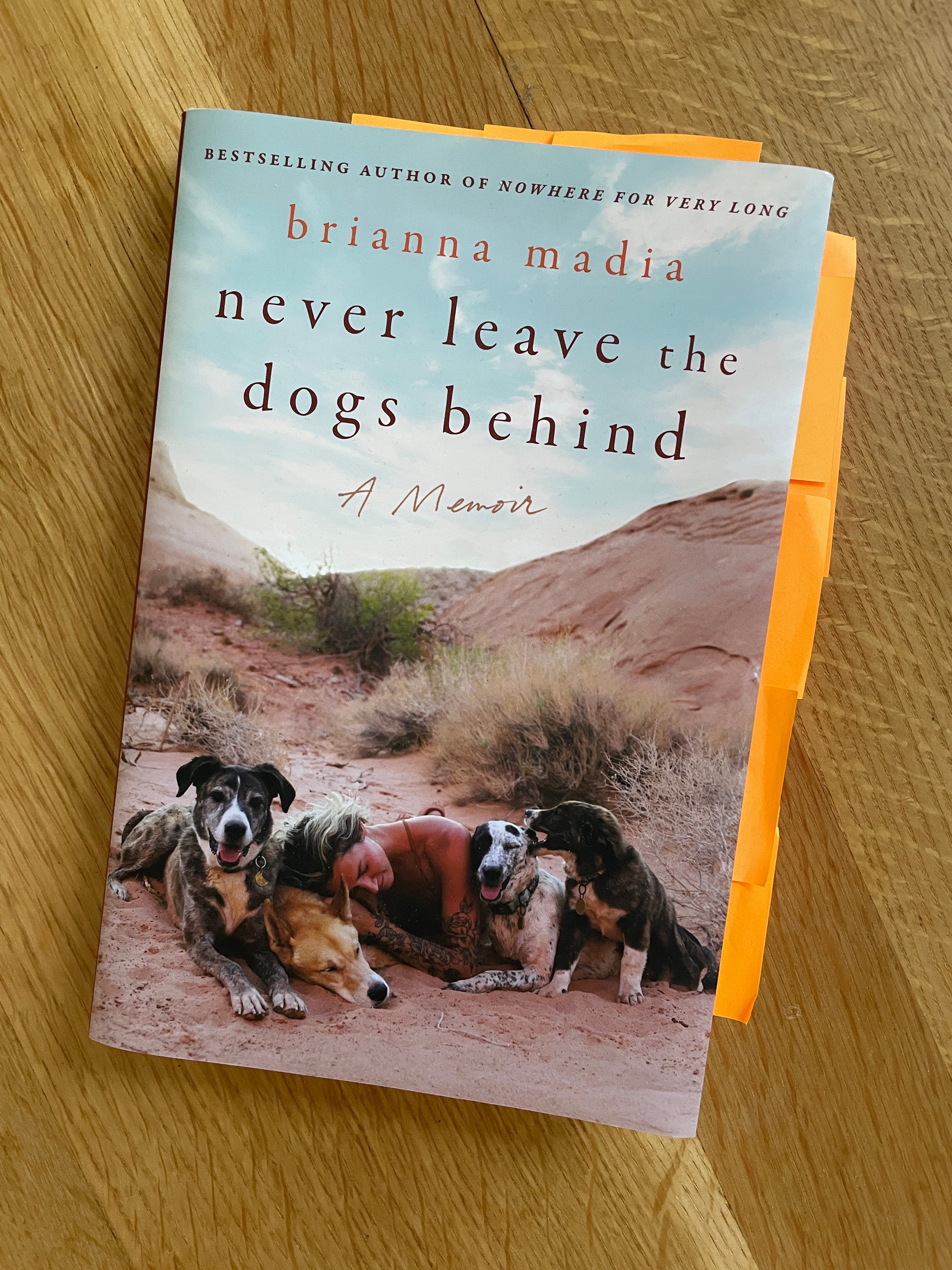
She found a way to write about van life, having multiple dogs, and existing as a “non-traditional” woman that feels authentic and insightful without pandering. A very hard line to walk.
“I had found the perfect place out in the desert to build my tower, and I had successfully locked myself in it.”
Her second book, Never Leave the Dogs Behind, shares the raw details behind her divorce from an addict, the extreme lengths internet stalkers went to in an attempt to destroy her life completely, and her experience living solo in the desert with four dogs in a state of mania.
The book was a fast-paced 208 pages, with the first few chapters being some of the toughest to read. Despite the heavy topics discussed, I was hopeful by the end and sad when there were no more pages to turn. She also somehow found a way to sneak in a few laughs. I’m glad we only have to wait until April for her third book.
“But it turns out, being with an addict was the most alone I would ever feel.”
What I appreciate most about her writing in this book is her willingness to share things that make her look like an imperfect heroine. There are no perfect heroines or victims, after all. When we’re at our lowest, we’re usually not the perfect “damsel in distress” who needs help. Sometimes we’re the friend who sleeps on a couch for longer than intended and cries incessantly.
Her writing also illustrates that sometimes after we’ve received all of the tender love a friend has to give, what’s left are the things we don’t want to hear. But even after those things are said, the support to help you make those positive changes is waiting for you with open arms.
“I have come to find that there is a societally acceptable amount of time one is allotted to grieve before it starts to make everyone uncomfortable.”
Soulmate Dogs
I was intrigued to read the stories behind some of her Instagram posts over the years: buying vacant land in the desert, driving to Baja for a solo vacation with her four dogs, fostering a litter of puppies in her trailer with no working bathroom or running water, etc.
She fostered a litter of puppies through Underdog Rescue Moab where the majority of surrenders they receive are puppies due to a stark unavailability of veterinary care throughout the Navajo Reservation—there are less than four veterinarians on the reservation that spans across Utah, Arizona, New Mexico, and Colorado.
While she previously held judgments about people who surrender dogs to shelters, her opinion has since changed. If someone doesn’t have the capacity to care for or feels like a dog isn’t a fit for their family, sometimes the best thing a person can do is put the dog in a position to find the right home.
“But had three different families not all consecutively decided that Dagwood was too much for them, too wild, too this, too that…he’d have never ended up where he belonged, which was, most certainly, with me. To understand and admit that you cannot care for an animal or provide the type of life they need is honest. To seek a solution to better suit that animal? That isn’t cruel at all.”
Just hours after bringing the foster litter of eight puppies to her property, she knew she’d be keeping a certain one. Since she was living on her own, she didn’t have to consult with anyone on the decision to adopt. She didn’t have to hear anyone say that she’d “gone overboard” or reached the socially acceptable quantity of dogs.
She just had to ask herself, and she thought it was a great idea.
She named him Banjo, and he became her fourth dog.
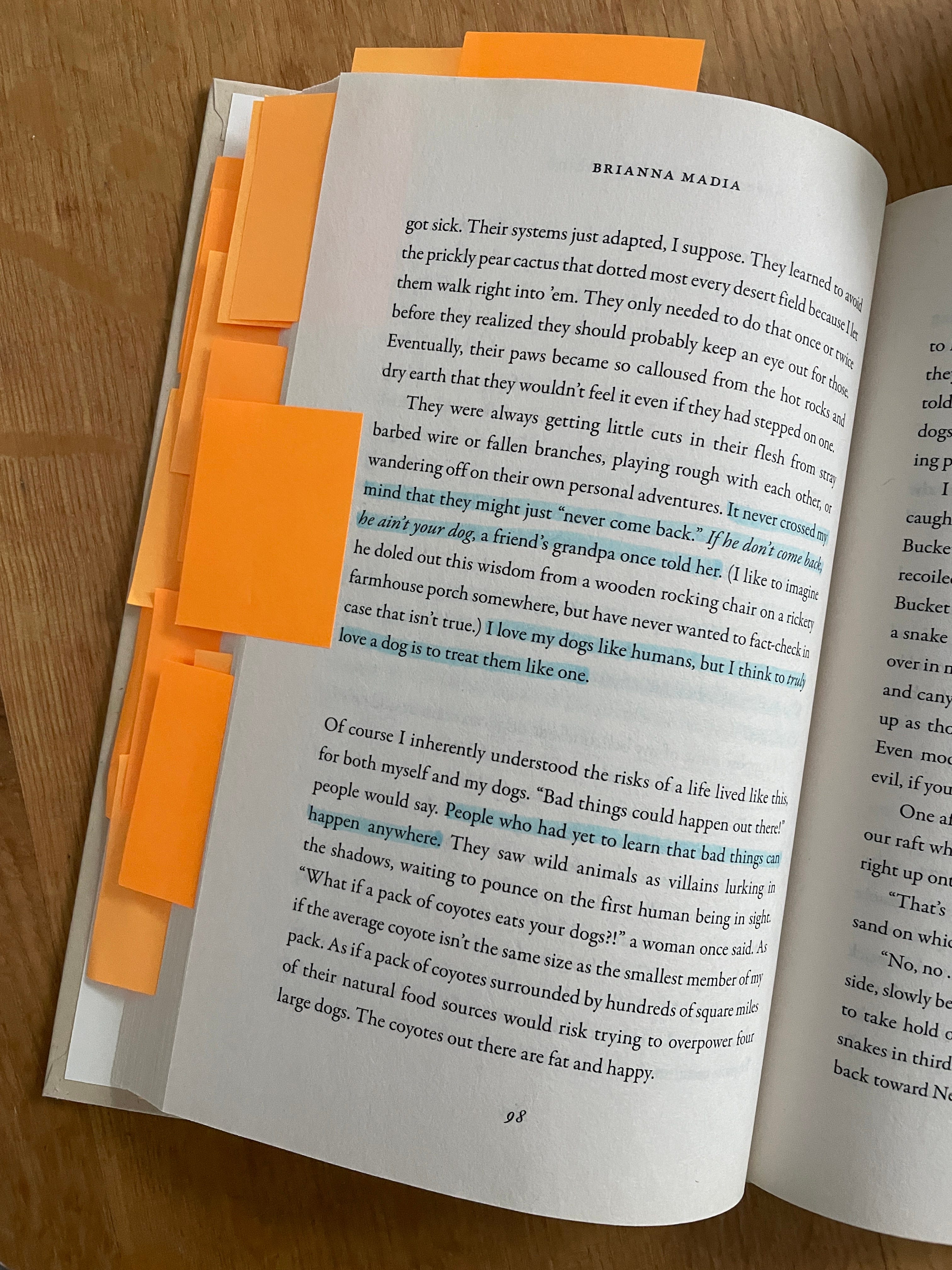
“He looked at me as though we’d met before. And there’s really no other way to describe it.”
Matriarchs Create Their Own Lore
If we are lucky, there is at least one woman in our lineage who creates lore worth emanating.
Madia’s grandmother got divorced shortly after her fiftieth anniversary because she believed she still had time to be happy in her late seventies. She moved into a condo and hung taxidermied deer heads on the wall that she found on the side of the road because she “didn’t want them to be lonely.” She set up live traps by the dumpster to catch stray cats and rehome them.
“I knew she qualified as the “crazy cat lady” type, societally mocked by men and women alike, but even as a kid, I envied the way she lived. After my own divorce, I understood it completely. To surround oneself with the conditional love of animals, to be able to save something in a world that often seems unsavable? That made all the sense in the world.”
It’s not hard to see how a grandmother that cool would plant the seeds for her granddaughter to create an independent life surrounded by animals.
Take It Out Back Behind the Shed
Some of her funniest anecdotes throughout the book came from her dating adventures post-divorce:
“The first time he invited me over, we got wasted on vodka and Red Bull, and then he put on his cowboy hat and started playing a Native wooden flute. I remember being astounded at how good he was. I also remember being astounded that I was in a trailer with a flute-playing, motorcycle-riding cowboy.”
“You think anyone’s ever traded sex for access to heavy machinery before? … He was polite, and kind, and he wanted to get to know me, so naturally, I stopped answering all of his calls and texts.”
She relied on the generosity of her various trysts to help with random tasks, like transporting a plastic shed kit from Home Depot to her property. Even though he made her promise to wait so he could help her assemble it, she ripped the box open as soon as he was out of sight.
Building this shed became about more than the shed. The two-day project in 100-degree heat was a journey of shedding old versions of herself, dealing with anger when there’s no one else to place it on, and sourcing a 3/8” socket wrench entirely on her own.
“Perhaps most people knew that it wasn’t really about the shed anymore. It was bigger. It was about coming to terms with who I had been, and who I had no choice but to be now: as if I was being dragged—kicking and screaming—into the person I’d become. Someone who could take care of herself. Someone who could learn to forgive herself for those times when she didn’t know how.”
You can preorder her third book, Homesick Nomad, from a local bookstore here.
Other Things I Read
What do Heated Rivalry and Zohran Mamdani have in common? Yearning.
My college girlhood does not look like the current girlhood in America. Alabama RushTok is terrifying. We were eating stale Bosco sticks at midnight from the campus store while today’s college girls are starving themselves for days before attending a football game.
A bookseller shared three of her favorite recommendations from 2025, furthering my romanticism of the profession.
Books I Added to My TBR List
The Silence of the Girls by Pat Barker: the story of the Iliad as told by Briseis, a Trojan queen and captive of Achilles
Hotel Splendide by Ludwig Bemelmans: the humorous memoir of a former waiter at the Ritz in the 1920s
The Philosopher in the Valley: Alex Karp, Palantir, and the Rise of the Surveillance State by Michael Steinberger: an in-depth look at the controversial surveillance technology firm Palantir and its outspoken CEO
Last week I talked about the books I read in 2025. Next week I’m reading How I Paid for College by Marc Acito.
Follow me on Instagram @klvcopywriting!
A Tiny Announcement: I added an option for paid subscriptions to my newsletter. All posts remain freely available to all subscribers, they do not live behind a paywall, but I wanted to provide an option for those who want to monetarily support my work.
Thank you for reading Kate Knows Everything. No AI robots were used in the creation of this newsletter, now or ever. When you purchase something through one of my links in this newsletter, I may earn an affiliate commission. I partner with Bookshop.org, a platform that supports local independent bookstores with every purchase.